What Is an Instagram Chatbot?
If you manage an Instagram page, you've definitely experienced this: you pick up your phone in the morning and dozens of unread messages are waiting for you. "How much is it?", "Is it in stock?", "How many days for shipping?", "Are you open today?"… While you try to answer each one, new messages keep coming. At some point you can't keep up, and some customers move on to other pages without getting a reply.
This is exactly the problem an Instagram chatbot exists to solve.
An Instagram chatbot is a system that automatically greets the DMs coming into your account and guides customers in the right direction. Some chatbots work according to rules you've defined in advance, while more advanced ones use AI to understand what the customer wants and respond accordingly.
The basic logic is simple: when a customer sends a message, they don't have to wait — they get an instant response. This both increases customer satisfaction and makes your job easier.
How Does an Instagram Chatbot Work?
To understand the logic of a chatbot, let's look at a typical scenario.
Say a customer writes "How much is it?" from a DM. The chatbot kicks in the moment it receives this message. If it's a rule-based system, it detects the word "price" and sends the price information you prepared in advance. If it's an AI-powered system, it also evaluates the context of the message; it tries to understand details like which product the customer is talking about, whether they're only asking about the price or want to learn something else.
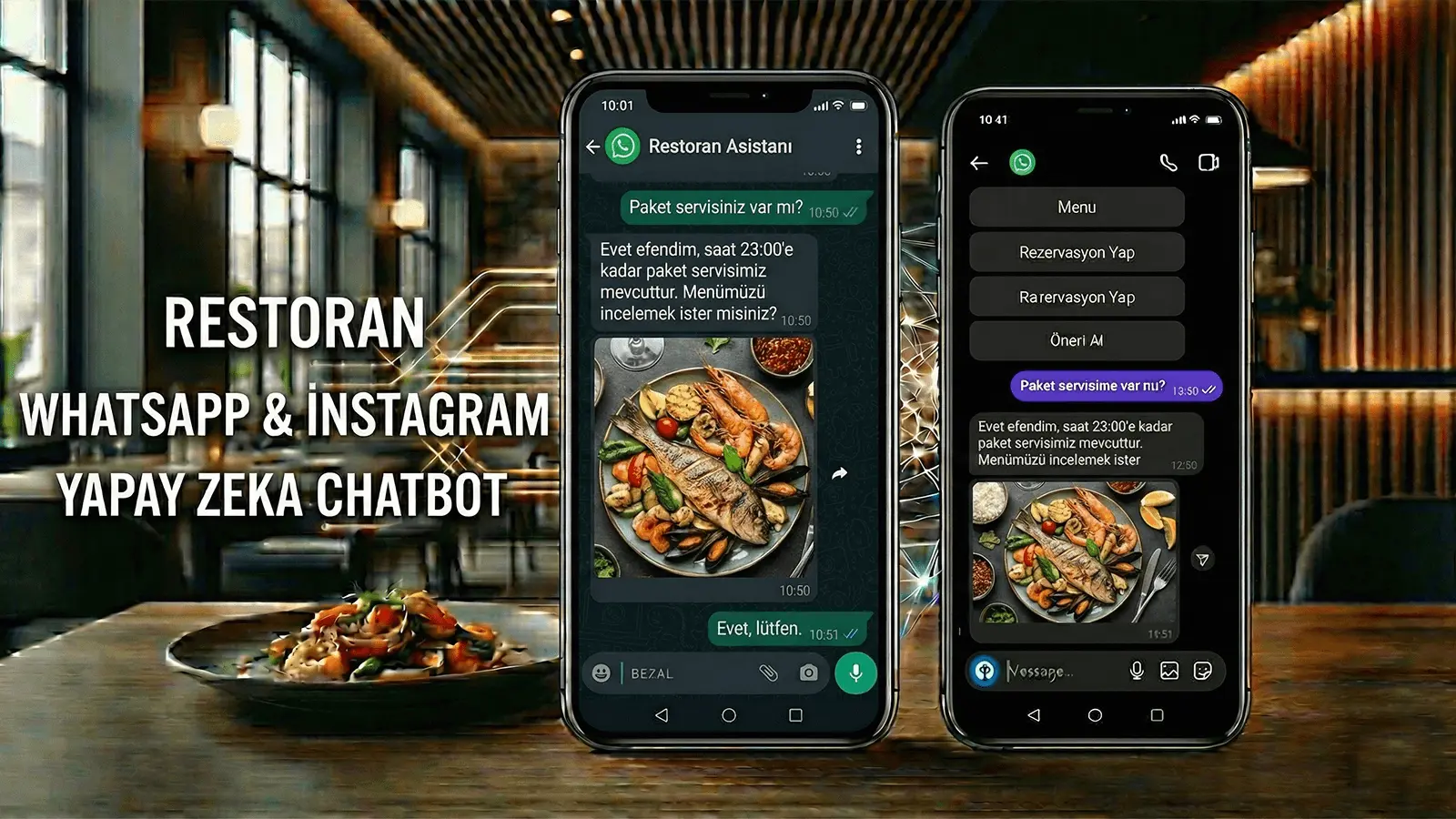
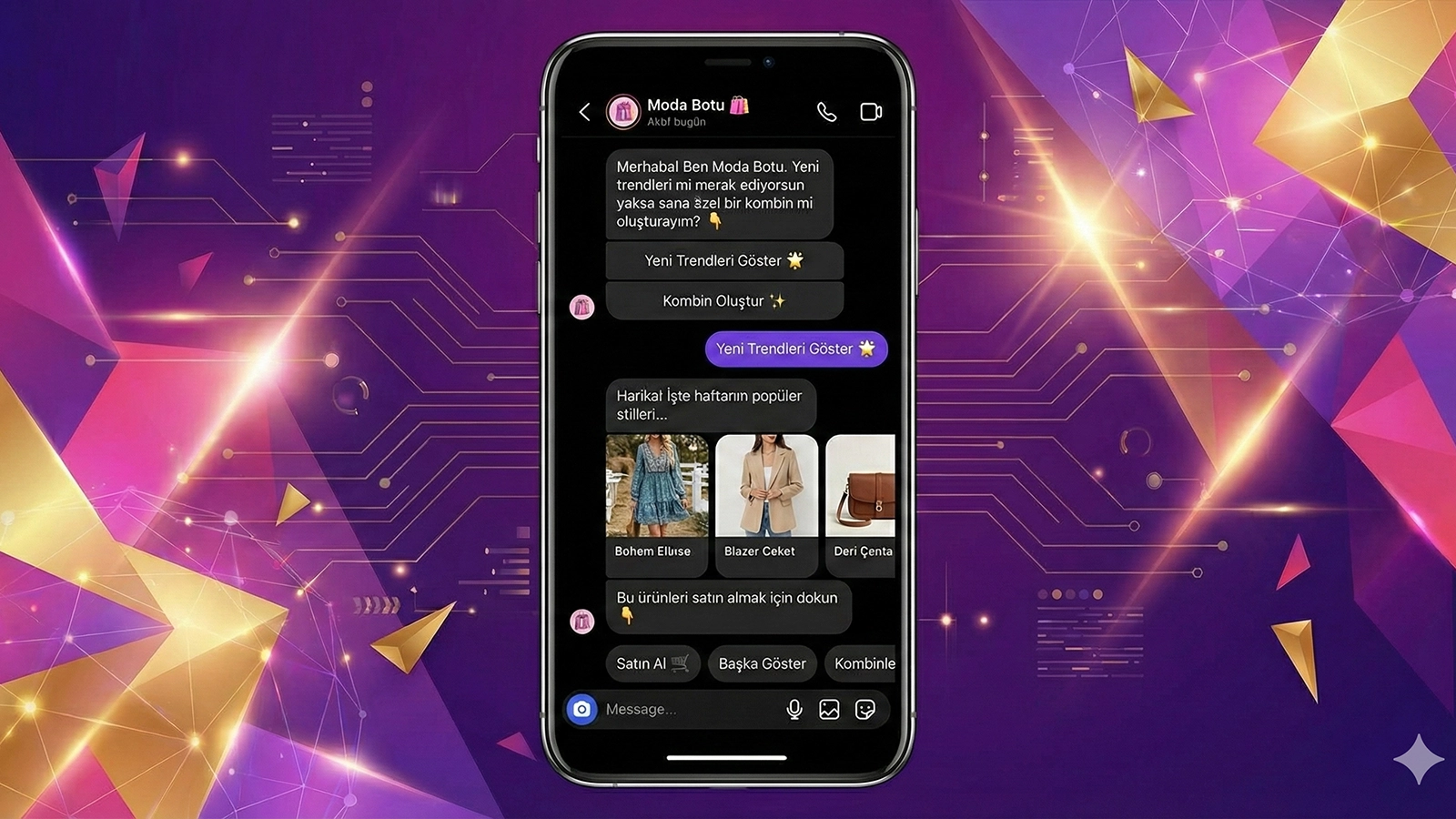
What happens next depends entirely on your design. The chatbot can offer the customer a few options: "Product information," "Shipping and delivery," "Return conditions," or "I'd like to talk to a customer representative." As the customer makes choices, the conversation moves forward. In the end, either the customer finds the information they're looking for or, if needed, is transferred to a representative.
There's an important distinction here. A good chatbot doesn't just answer questions; it moves the customer to the next step. In other words, saying "I provided information" isn't enough; it should move toward a sale, an appointment, or at least collecting contact information.
Chatbot Types and Which One You Should Choose
Instagram chatbots basically work with three different approaches. Which one suits you depends on your business's structure and customer profile.
The first is menu-based chatbots. These are the simplest and most stable. They offer the customer options like "1 - Price information, 2 - Shipping process, 3 - Return conditions." The customer proceeds by typing the number or option. They're easy to set up and work quite well for frequently asked questions. Especially if your DM traffic isn't very heavy and the questions are usually on similar topics, this model will do the job.
The second is keyword-triggered chatbots. When the customer types a specific word, the relevant flow starts. For example, someone who types "shipping" gets shipping information, and someone who types "returns" gets the return process explained. They're very useful during campaign periods; you can automatically send the latest offers to everyone who types "discount" or "campaign."
The third is AI-powered chatbots. These look not just at the words of a message but at its intent. Even if a customer writes a long message like "Hi, do you have the black one in size M, and how long does shipping take?", the system can understand what they want and answer in one go. It offers a more flexible and natural experience, but it needs to be trained well to work correctly.
Does a Chatbot Really Work?
I hear this question a lot. Business owners who have tried "auto-reply" systems before and been disappointed are especially skeptical. But you start to see the benefit of a well-designed chatbot within a few weeks.
The most noticeable impact shows up in response time. When a customer sends a message, they get a reply within seconds. This makes a big difference especially in the evenings or on weekends, because even when you're not available, the customer doesn't have to wait.
The second important benefit is the automatic answering of repetitive questions. Instead of answering questions like shipping time, working hours, and return conditions dozens of times a day, you leave them to the chatbot. This lets you or your team focus on more complex requests.
Then there's the sales side. Customer loss caused by delays goes down. Imagine: a customer asked about a product at 11 p.m. and got no reply until morning. By then, they may have already shopped from another page. The chatbot closes this gap.
Finally, there's the data-collection side. The chatbot can systematically collect information from the customer such as name, phone number, and the product they're interested in. This information becomes useful later in your marketing efforts.
Which Businesses Is It Suitable For?
Almost anyone who handles customer communication via Instagram can benefit from a chatbot, but in some sectors its impact is much more noticeable.
For e-commerce businesses, it has become almost essential. In categories like clothing, cosmetics, accessories, and jewelry, DM traffic is heavy and customers usually ask similar things. A chatbot significantly reduces this load.
It's also very useful in the service sector. Beauty salons, clinics, gyms, businesses offering courses… A chatbot can easily handle questions like appointment requests, price information, and working hours.
It also provides great convenience for agencies that manage multiple Instagram accounts. By setting up separate chatbot flows for each client, you can centralize management.
If the sentence "we can't keep up with DMs" comes up often in your business, it's the perfect time to set up a chatbot.
What Should a Good Chatbot Be Like?
The most common mistake when setting up a chatbot is making it talk too robotically. If the customer feels they're talking to a machine, they drop out of the conversation. A good chatbot should be natural, brief, and goal-oriented.
Messages should move forward in small steps, not in long paragraphs. Instead of loading the customer with too much information at once, guiding them step by step is more effective. At each step, you should move the customer to the next stage; don't settle for just providing information — bring them closer to a sale or an appointment.
There should also always be an "exit door." The customer should be able to say "I'd like to talk to a representative" at any moment, and this option should be visible at every stage. A chatbot can't solve everything; where it can't, it needs to hand off quickly.
What to Watch For When Choosing a Chatbot
There are many different solutions sold under the name "chatbot" on the market. It's worth paying attention to a few criteria when making your choice.
First, it's important that editing scenarios is easy. You don't want to depend on a developer for every campaign or change. You should be able to easily create and edit flows yourself.
A handoff-to-live-support feature is a must. The chatbot should recognize situations it can't solve and transfer the customer to a representative.
Reporting is also critical. You need to be able to see data like how many conversations took place, which questions were asked most, and which flows were used most. This data helps you continuously improve the chatbot.
Finally, don't overlook the data-security issue. Customer information is sensitive data and must be stored securely.
Setting Up an Instagram Chatbot with Mettanex
If you want to set up an Instagram chatbot but don't know where to start, it makes sense to begin with the most repeated questions.
In the first week, automate shipping, returns, and campaign information. These three topics usually make up the bulk of DM traffic. When you hand them off to the chatbot, your workload drops immediately.
In the second week, add product-routing and quote-collection flows. Let the customer say what they're looking for, and have the chatbot show them suitable products or take their contact information so you can follow up.
After that, you can continue with AI-powered enhancements. More natural conversation flows, smarter routing…
The Mettanex Instagram Chatbot is designed to help you set up these steps one by one. First we reduce the load on your business, then we develop flows that serve sales.
Frequently Asked Questions
What is an Instagram chatbot?
An Instagram chatbot is a system that automatically replies to messages coming via DM and guides customers in the right direction. There are different types, from simple rule-based systems to advanced AI-powered solutions.
Does an Instagram chatbot increase sales?
Yes, when set up correctly, it increases sales. Its most important effect is reducing customer loss through fast replies. It also raises the conversion rate by guiding the customer through the purchase process.
Can the chatbot hand off to a customer representative?
Yes. Every well-designed chatbot flow has an "I'd like to talk to a representative" option. When the chatbot can't solve a situation, it automatically transfers the conversation to a representative.
Is it hard to set up an Instagram chatbot?
No, it's quite easy with the right platform. With solutions like Mettanex, you can create your own chatbot flows without writing code, using drag-and-drop logic.